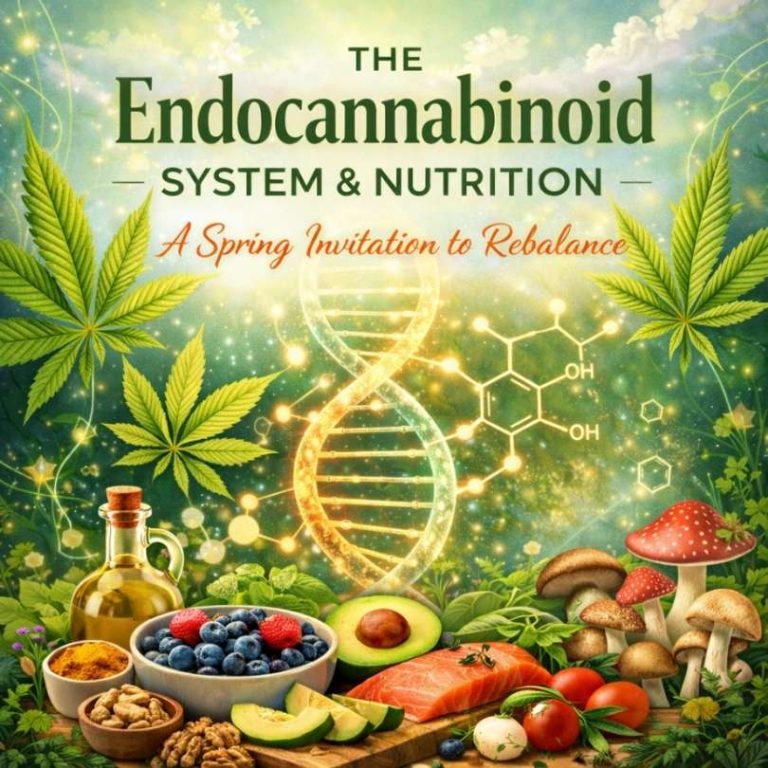
Diet and the Endocannabinoid System are closely connected, especially during seasonal transitions. As winter softens into spring, digestion shifts, energy fluctuates, inflammation changes, and sleep patterns adjust as daylight stretches longer. These seasonal transitions are not just psychological—they are physiological. Light exposure alters cortisol rhythms. Activity levels change. Our microbiome shifts. Metabolism recalibrates.
And quietly in the background, one system is helping orchestrate that adaptation: The endocannabinoid system (ECS).
Spring is a natural time to ask a simple but powerful question: How does what we eat influence the body’s ability to regulate itself?
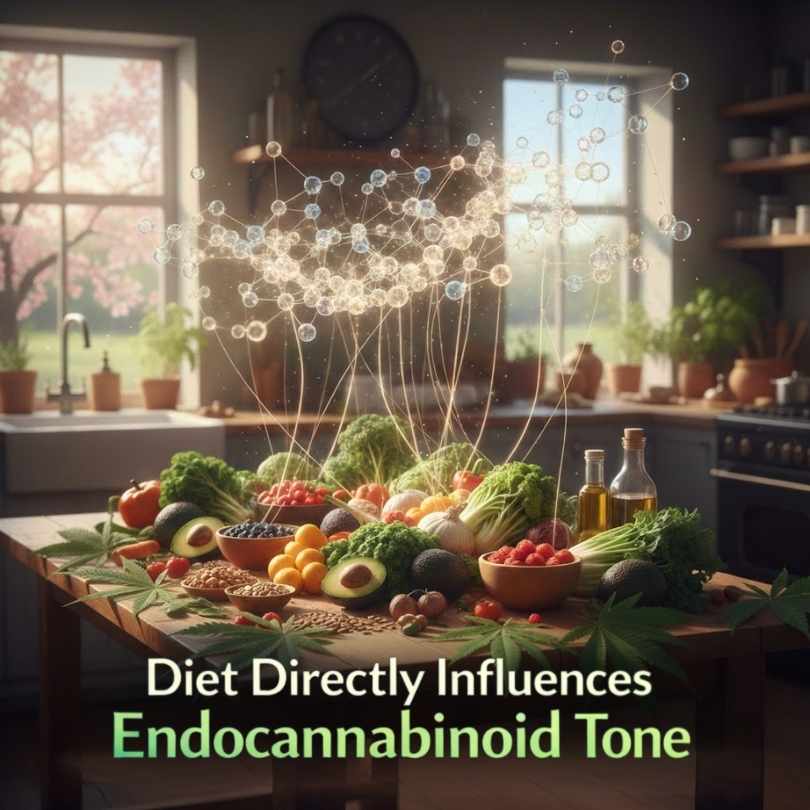
It bears emphasizing: diet directly influences endocannabinoid tone.
The ECS: Your Body’s Balancing Network
The endocannabinoid system is a lipid-based signaling network made up of three core components: endocannabinoids (such as anandamide and 2-AG), receptors (CB1 and CB2), and enzymes that build and break down these molecules.The ECS is the largest neurotransmitter signaling system, regulating all 11 organ systems, our immune system and and all the neurotransmitter signaling systems in our bodies.
Unlike many neurotransmitters that are stored and released on command, endocannabinoids are produced “on demand” when the body senses imbalance (Di Marzo, 2018). They are synthesized directly from fats embedded in cell membranes.
CB1 receptors are found primarily in the brain and nervous system. They influence mood, appetite, pain perception, sleep, and stress reactivity. CB2 receptors are concentrated in immune tissues and peripheral organs, where they help regulate inflammatory signaling and immune cell activity (Zou & Kumar, 2018).
The ECS does not stimulate or suppress randomly. It modulates. It fine-tunes. Its purpose is balance. As Cristino et al. (2020) describe, the ECS acts as a regulator, adjusting neurotransmitter release, tempering excessive inflammation, and recalibrating metabolic signaling when internal or environmental conditions shift. In other words, it is constantly listening and adjusting. And the raw materials it uses to do this come directly from your diet.
Check out our learning library on The Endocannabinoid System.
Fats as Structural Information
Endocannabinoids are derived from polyunsaturated fatty acids, specifically omega-6 and omega-3 fats. The Standard American Diet (SAD) has taken a toll on all of our endocannabinoid systems. Modern diets are often high in omega-6 fatty acids but low in omega-3s. This imbalance increases levels of arachidonic acid, which promotes pro-inflammatory signaling and can amplify CB1 receptor activity (Di Marzo, 2018). When CB1 signaling in metabolic tissues becomes chronically overstimulated, it may contribute to insulin resistance, increased adiposity, and disrupted energy regulation (Cristino et al., 2020).
Omega-3 fatty acids, especially EPA and DHA, play a key role in producing mediators that support anti-inflammatory balance and promote healthier receptor signaling (Cristino et al., 2020). The important takeaway is not that not one meal changes everything. It doesn’t. The ECS responds to patterns over time. Cell membrane composition shifts gradually across weeks and months which is directly influenced by our diet and nutrition.
Supporting that balance begins with consistent intake of omega-3-rich foods such as wild-caught salmon, sardines, flaxseed, chia seeds, walnuts, and hemp seeds. These foods do not “activate” the ECS like a medication would. Instead, they provide structural integrity and the lipid architecture necessary for resilient signaling.
Diet is not a shortcut to Endocannabinoid System balance. It is the foundation.
Beyond Cannabis: Plant Chemistry Everywhere
When people hear “endocannabinoid system,” they often think exclusively of cannabis or hemp. But plant compounds that interact with this system are not limited to THC or CBD.
Beta-caryophyllene (BCP), a terpene found in black pepper and cloves, interacts directly with CB2 receptors and demonstrates anti-inflammatory activity (Askari & Shafiee-Nick, 2019). This illustrates that receptor interaction exists across culinary plants, not just cannabis.
Limonene in citrus peel and myrcene in mango and hops influence mood and stress pathways through overlapping signaling systems. While concentrations in food differ from concentrated extracts, the broader point remains: plant chemistry operates along a spectrum.
Nutrition and cannabinoid science are not separate conversations. They converge at shared receptor systems and inflammatory pathways. The dialogue between plants and human physiology is layered and continuous.
Explore beta-caryophyllene (BCP) supplements at Blair Medical and discover its impact on the endocannabinoid system. Watch an insightful webinar with Dr. Philip Bair as he explains the science behind BCP and its potential benefits.
The Microbiome–ECS Axis
In recent years, research has increasingly highlighted the deep connection between the gut microbiome and the endocannabinoid system, often referred to as the microbiome–ECS axis.
The endocannabinoid system (ECS) regulates intestinal permeability, gut motility, immune signaling, and visceral pain. At the same time, the microbiome influences receptor expression, enzyme activity, and inflammatory tone (Srivastava, Lutz, & Ruiz de Azua, 2022). Disruptions in this axis are being studied in metabolic disorders, inflammatory bowel disease, obesity, and neuroinflammatory conditions.
Project CBD (2023) explores how dietary fatty acids and microbial diversity influence ECS tone through both lipid and immune pathways. Canna Specialists (2023) further describe how this bidirectional relationship shapes systemic inflammation and stress resilience. In practical terms, gastrointestinal gut diversity supports regulatory balance.
That means incorporating a wide range of plant fibers, colorful vegetables, legumes, nuts, seeds, and fermented foods such as yogurt or kimchi. It also means minimizing ultra-processed foods that can disrupt gut integrity.
When the microbiome thrives, ECS signaling stabilizes.
Lifestyle as Regulatory Input
Nutrition is only one piece of the regulatory puzzle. Exercise has been shown to boost circulating endocannabinoid levels, contributing to improved mood and reduced perception of pain. Quality sleep plays a key role by stabilizing receptor sensitivity and enzymatic function. On the other hand, chronic stress disrupts glucocorticoid signaling, which closely interacts with the modulation of the endocannabinoid system (ECS).
The ECS thrives on consistency, not force. Supporting it isn’t about intense interventions but about fostering steady habits that sustain your body’s natural rhythms. Prioritize consistent movement. Establish regular sleep patterns. Incorporate healthy, supportive fats into your diet. Diversify your intake of plant-based foods. Minimize chronic stress where possible. In the long run, small, consistent behaviors have a far greater impact on regulatory balance than extreme, short-term efforts.
Thoughtful Adjuncts for Supplementation
For some individuals, strategic supplementation may complement foundational habits. Omega-3 fatty acids support lipid balance. Magnesium enhances nervous system resilience. Curcumin assists inflammatory regulation. Probiotics combined with prebiotic fiber support the microbiome–ECS axis. Vitamin D contributes to immune equilibrium.
Professional-grade options you might like to try are available through our curated Fullscript Nutraceutical Online Dispensary. It provides formulations designed to meet high standards, offering a structured alternative to navigating retail supplements on your own.
Full-spectrum hemp-derived formulations may also support ECS signaling through interactions with CB1 and CB2 receptors distributed throughout the central and peripheral nervous systems. Digestive-focused cannabinoid products may influence gut motility and inflammatory responses by targeting ECS receptors in the gastrointestinal tract. Bloom Hemp Essentials Digestive Formula, a full-spectrum blend of CBD, CBG, and ayurvedic botanical extracts is designed to support gut health and nurture the microbiome.
Bloom Hemp CBD products are Green Nurse Approved, third-party tested, and formulated with clear dosing standards. When cannabinoids are layered into an already supportive lifestyle, many individuals report improved digestive comfort and greater dietary consistency.
Cannabinoids function most effectively as part of a comprehensive system, complementing and enhancing overall wellness rather than serving as a standalone solution. By integrating cannabinoids into a balanced approach to health, individuals can experience the full range of benefits these plant-based therapies offer. This holistic perspective emphasizes the importance of supporting the body’s natural systems, promoting harmony and optimal wellness through the thoughtful use of cannabinoids.

A Note on Microdosing
There has also been growing interest in carefully structured microdosing of psilocybin-containing mushrooms as a tool for supporting behavioral flexibility and stress resilience. Emerging reviews suggest potential associations with mood improvements and cognitive flexibility, though findings remain mixed and controlled data are still limited (Cameron et al., 2020; Polito & Liknaitzky, 2022).
Because eating behaviors are closely tied to stress reactivity and reward pathways, some individuals report that microdosing, when paired with intention and behavioral support, enhances mindfulness around food choices.
It is important to emphasize that microdosing is not a metabolic intervention and should not replace foundational nutrition, movement, or sleep stabilization. Consideration of microdosing should include attention to legal status, psychiatric history, and professional guidance.
Catch up on last month’s Green Nurse Podcast, where we featured our Clinical Conversations Webinar exploring the topic of Microdosing Psilocybin.
A Spring Recalibration
Spring does not demand a dramatic detox or overhaul. It offers a moment to reassess foundations. Journaling is a powerful tool for reflection. This spring, take some time to ask yourself….
Are my dietary omega-3 sources consistent?
Has my intake of plant diversity narrowed?Am I eating all of the colors of the rainbow?
Is sleep protected?Is rest being prioritized?
Is movement steady?
Are stress patterns chronic or episodic?Am I breathing deeply?
Am I spending enough time outdoors, enjoying fresh air and sunlight?
The Endocannabinoid System responds to conditions
When cell membrane fats are balanced, cellular communication improves, enhancing overall function. A diverse microbiome supports a stable inflammatory response, while regular sleep recalibrates receptor sensitivity, promoting homeostasis. Consistent movement naturally boosts endogenous cannabinoids, strengthening the body’s capacity for self-regulation and balance.
Achieving wellness is less about adding more and more about restoring natural rhythms. Spring offers an ideal opportunity to embrace this recalibration, aligning with the body’s innate ability to heal and thrive.
Through thoughtful, evidence-based approaches to wellness, we aim to support you in creating strong foundations. Instead of forcing change, we focus on gentle, meaningful adjustments that foster balance and longevity.
Resources
- Blair Medical and BCP – Beta-caryophyllene – Holistic Caring
- Green Nurse Approved CBD – Bloom Hemp CBD
- Supplements & Nutraceuticals – Fullscript – Holistic Caring
- Microdosing Psilocybin – Mood Healers – Holistic Caring
References
Askari, V. R., & Shafiee-Nick, R. (2019). Promising neuroprotective effects of beta-caryophyllene against neurodegenerative diseases. Pharmacological Research, 145, 104117. https://pubmed.ncbi.nlm.nih.gov/30529211/
Cameron, L. P., Nazarian, A., & Olson, D. E. (2020). Psychedelic microdosing: Prevalence and subjective effects. Journal of Psychopharmacology, 34(12), 1325–1336. https://doi.org/10.1177/0269881120953994
Canna Specialists. (2023). Inside the microbiome–endocannabinoid axis. https://www.cannaspecialists.org/inside_the_microbiome_endocannabinoid_axis
Cristino, L., Bisogno, T., & Di Marzo, V. (2020). Cannabinoids and the expanded endocannabinoid system in neurological disorders. Nature Reviews Neurology, 16(1), 9–29. https://pubmed.ncbi.nlm.nih.gov/31831863/
Di Marzo, V. (2018). New approaches and challenges to targeting the endocannabinoid system. Nature Reviews Drug Discovery, 17(9), 623–639. https://pubmed.ncbi.nlm.nih.gov/30116049/
Polito, V., & Liknaitzky, P. (2022). The emerging science of microdosing: A systematic review of research on low-dose psychedelics. Neuroscience & Biobehavioral Reviews, 139, 104738. https://pubmed.ncbi.nlm.nih.gov/35609684/
Srivastava, R. K., Lutz, B., & Ruiz de Azua, I. (2022). The microbiome and gut endocannabinoid system in the regulation of stress responses and metabolism. Frontiers in Cellular Neuroscience, 16, Article 867267. https://doi.org/10.3389/fncel.2022.867267
Project CBD. (2023). Diet & the endocannabinoid system. Retrieved from https://projectcbd.org/health/diet-the-endocannabinoid-system/
Zou, S., & Kumar, U. (2018). Cannabinoid receptors and the endocannabinoid system: Signaling and function. International Journal of Molecular Sciences, 19(3), 833. Retrieved from https://www.mdpi.com/1422-0067/19/3/833