
In recent years, the wellness community has seen a growing interest in the ancient practice of Ayurveda and its holistic approach to health. Interestingly, cannabis is re-emerging as an integral component of this traditional Indian medicine. Ayurveda, often referred to as the “science of life,” originated in India thousands of years ago. It focuses on balancing the body, mind, and spirit through natural remedies, dietary changes, and lifestyle adjustments. One of its core principles is the use of plants and herbs to promote healing and maintain wellness. Let’s explore how cannabis, along with CBD, intersects with Ayurveda and what benefits they offer.
The Ancient Wisdom of Ayurveda
The healing system of Ayurveda is over 5,000 years old. Developed and practiced by the ancient Vedic culture, it was originally passed down from master to apprentice. Ayurveda is built around an intricate study of the energies that move through the universe, interacting with each other as they move in and out of balance. Everything in nature has energetic qualities. Since humans are part of nature, we mirror these energies too.
We are born with a certain energetic constitution (our dosha). Yet as we move through life, the seasons, how we care for our bodies, the foods we eat, and our habits and relationships all shape us. These energetic qualities play on one another, bringing balance or imbalance to our environment and ourselves.
When we begin to look for Ayurvedic tools that move us towards harmony and balance it is important to remember that we aren’t an isolated system; first and foremost, we are a part of nature. This is why Ayurveda puts a strong emphasis on living seasonally; what you eat and how you care for yourself should shift with your environment and the seasons.
Understanding the Three Doshas
Ayurveda categorizes all things by its primary energy or dosha, including us humans. It’s helpful to discover our primary constitution (dosha) when we begin our Ayurvedic healing journey. Our dominant dosha may change throughout our life, and showcases any strong tendencies that we have.
By learning about our doshas, we begin to shed light on how our tendencies can lead us towards imbalance; having this awareness helps us make choices that bring us towards balance. The three doshas are represented in everyone, but we often find one that predominates in our true nature.
Vata
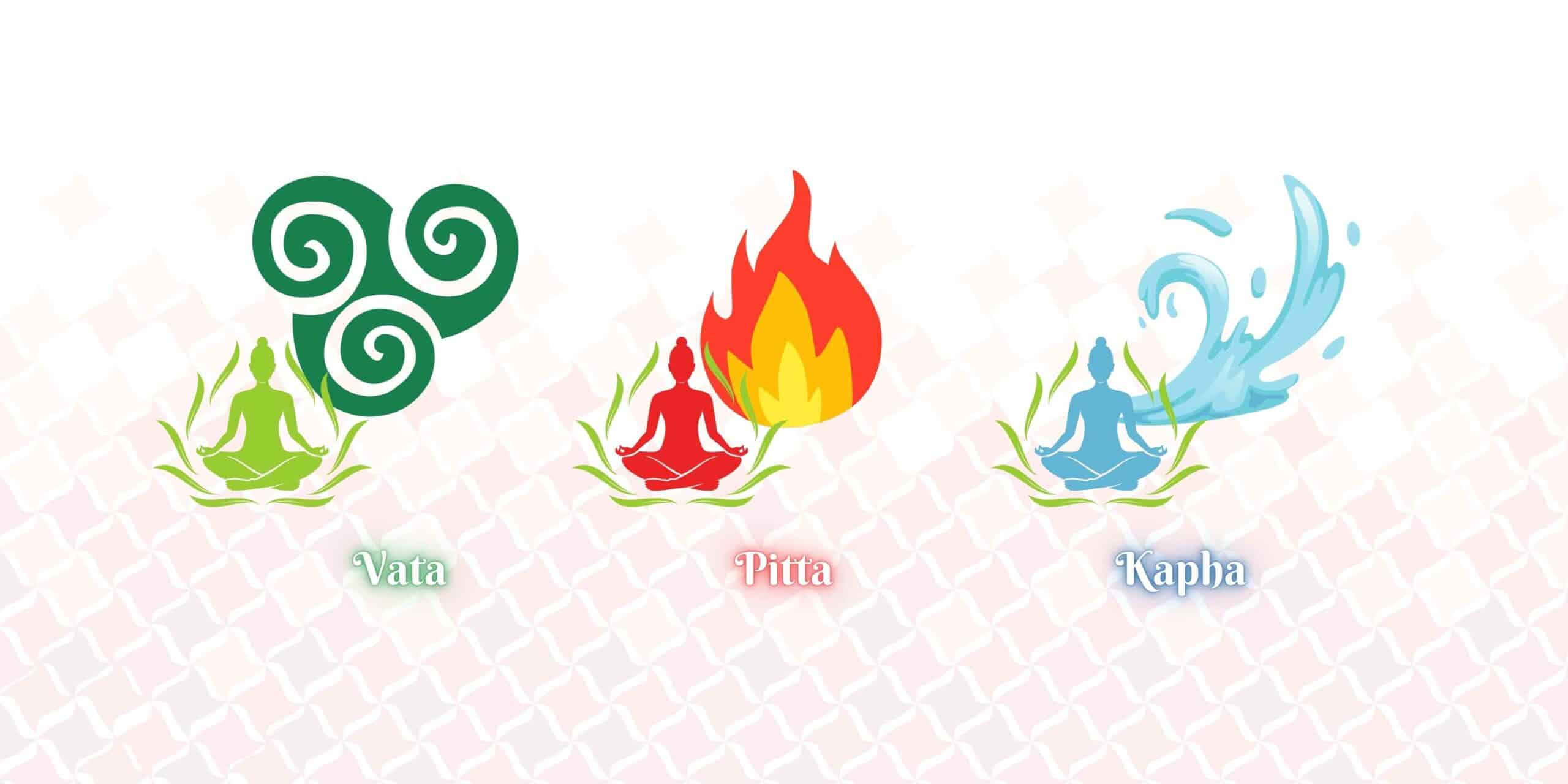
Vata is created from the combination of the air and space elements. Its physical qualities are dry, light, cold, rough, mobile, invisible and formless. Think air and wind across wide open plains. Think outer space, cold and vacuous. Think about the characteristics of Autumn: the air often dry and chilled, the wind blowing dead leaves off the trees, leaving them bare. People with a predominantly vata dosha tend to be creative, energetic, and flexible. But when vata is out of balance, these people may become anxious and ungrounded.
Pitta
Pitta is created from the combination of the fire and water elements. Some of the physical qualities of pitta are hot, light, sharp, fluid, and penetrating. Think about summer, particularly summers in climates with high humidity. Think about fire and how it dances; fierce but fluid. These things embody the pitta dosha. People who are predominately pitta tend to have high levels of motivation and determination. They are ambitious, competitive and charismatic, often making good leaders. When this dosha is out of balance these people may be irritable, easily angered and find themselves struggling with burn out.
Kapha
Kapha is created from the combination of earth and water elements. The physical qualities of the kapha dosha are cold, sturdy, heavy, dense and slow. Kapha is the embodiment of winter; the cold, dark days where all we want to do is sit inside and watch the snow fall. When you think of the kapha dosha, think of this season where the days are short, where time moves slowly and motivation is hard to come by. People who have a lot of kapha naturally tend to be grounded, calm and steady. They move through life methodically and are patient, thoughtful and caring. When too much kapha accumulates and it becomes imbalanced these people can be lethargic, complacent and overly sentimental. They can also be prone to stubbornness and depression.
Bringing Balance Through Ayurvedic Practice
We like to think of the doshas as energetic manifestations. They show up throughout our world, in our own tendencies, in the qualities of our food, and in the way a landscape presents itself in nature. Ayurveda heals by bringing balance to these energies, allowing their qualities to manifest in a healthy way. When engaging with these energies, it’s essential to remember one thing: similar energies tend to amplify one another.
Just as the vata winds blow across the plains and add to their dryness, foods that manifest the vata energies will increase vata in the person that consumes them. This works the same way for all three doshas. When we know our predominant dosha and how we are out of balance, we can begin to add energetic qualities that counter this dominance. This helps bring up the energetic levels of the other doshas in our system. With this idea in mind, we can look to Ayurveda for guidance. It offers suggestions for our diet, activities, and personal care rituals that support balance in our predominant tendencies.
Like other ancient healing traditions, Ayurveda revolves around the flow of energy. It has stood the test of time, drawing from wisdom rooted deep within us. This wisdom reminds us that we are not isolated beings. Instead, we form an integral part of an energetic system. Energy constantly flows from the season to the land, from the land to the food, and from the food to us. This exchange shapes us into beings filled with health and vitality. It’s essential as we travel on our healing journey.
Cannabis and CBD in Ayurvedic Medicine
Cannabis has a historical presence in Ayurvedic medicine. Texts like the Sushruta Samhita describe its use for digestive issues, stress reduction, and appetite stimulation. Ayurveda recognizes cannabis as a sacred plant with therapeutic benefits, including balancing doshas, relieving pain, and aiding digestion. In Ayurveda, practitioners view CBD as a modern tool that complements traditional herbal practices. It may enhance the body’s natural healing processes, reduce inflammation, and promote relaxation. CBD, a non-psychoactive component of cannabis and hemp, also complements traditional herbal practices by enhancing natural healing and reducing inflammation. The integration of cannabis and Ayurveda highlights the potential for ancient wisdom to enrich modern wellness approaches. Consulting a certified Ayurvedic practitioner can help individuals explore these holistic benefits responsibly.
Thank you to Joanna Tandberg who is a Board-Certified Ayurveda Wellness Counselor who has written this guest newsletter for us on the ancient wisdom of Ayurveda.

Join Us In The Free Holistic Caring Network and Get Your Learn On!