A Nurse’s Journey into Genetics and Cannabis Medicine
A guest blog by Marianne Heeringa, BSN, RN, MLT,
Cannabis Nurse Health Coach, Holistic Nurse Coach, Genetic Nurse
Have you ever asked yourself: Where did I come from? Why am I here? Where am I going?
The search for the answers to those questions has led me, step by step, to my purpose and calling as a faith-centered Holistic Nurse Coach specializing in genetics and cannabis medicine.
Looking back, I think the journey began long before I ever wore scrubs. Nursing and helping people seemed to be built into my DNA. Perhaps one of the first signs was when, as a little girl, I transformed twin beds into makeshift hospital beds by propping a child’s chair beneath the mattress to create what I imagined was a 30-degree hospital-bed angle. My sisters would pretend to be sick, and I would care for them.
That early spark eventually required me to face one of my greatest childhood fears: the sight of blood. In my early twenties, I chose to become a medical laboratory technician. In a beautiful irony, the very thing I once feared became part of my calling. Venipuncture became one of my strongest clinical skills, but an even more important skill began to develop: listening to patients.
Working in the laboratory taught me to look beneath the surface. I learned to interpret laboratory results, recognize patterns, and ask questions. But over time, I became increasingly curious about the person behind the specimen and the numbers. I wanted to be beside the patient. When the opportunity to become a nurse presented itself, I took another leap of faith.
Nine years of emergency-room nursing, followed by hospice nursing, eventually led me to a question that would change the direction of my career: Why do people respond so differently to the same medication? And is there a way to reduce preventable medication side effects?
My transition into hospice was partly a search for greater spiritual understanding , both to serve my patients more deeply and to understand life, suffering, and purpose for myself. There I witnessed something remarkable. When medications were carefully reconciled, unnecessary medications were discontinued, symptoms were managed around the patient’s goals, and quality of life became the focus, some people improved significantly. Patients and families were also encouraged to focus on what brought comfort, meaning, connection, and joy. Occasionally, a patient improved enough that they no longer met hospice eligibility criteria.
These experiences intensified my curiosity about medications, individual response, and the importance of seeing the whole person rather than simply treating a diagnosis. I had also seen how medication-related problems could contribute to emergency care and hospital readmissions. I wanted to understand why. Then, one day while searching online, I discovered pharmacogenetic testing.
My diagnostic laboratory background immediately came alive. I read about laboratories offering pharmacogenetic testing to help clinicians understand how inherited genetic variations may influence a person’s response to certain medications. I called a laboratory to learn more.
The concept fascinated me. Many medications are processed through enzyme pathways, including enzymes in the cytochrome P450 system. Genetic variants can affect the activity of some of these enzymes. For example, CYP2D6 phenotype may influence the metabolism of certain medications. Depending on the medication, being a poor, intermediate, normal, rapid, or ultrarapid metabolizer may help explain differences in drug exposure, effectiveness, or risk of adverse effects. Importantly, pharmacogenetic results are one piece of clinical decision-making and must be considered alongside the specific medication, other medications, health conditions, and clinical evidence.
I remember thinking: This explains so much of what I have witnessed throughout my nursing career. And we could learn some of this information from a non-invasive cheek swab. My heart filled with hope. I believed I might be able to serve vulnerable populations in a different way, by helping clinicians and patients understand how genetics could contribute to safer, more personalized medication decisions. Once again, I took a leap of faith and stepped away from traditional bedside nursing into education and clinical implementation.
Over the next decade, I remained in the trenches of genetics. I educated physicians and patients, helped interpret reports, and worked through the real-world challenges of clinical implementation, reimbursement, and access. I collaborated with laboratory scientists, pharmacists, clinicians, developers of clinical decision-support software, and leaders in molecular diagnostics. We shared our experiences with policymakers and continued working toward responsible implementation.
Each laboratory and each role introduced me to another layer of genetics: pharmacogenetics, hereditary risk, preventive and wellness-focused testing, nutrition, fitness, common disease predispositions, skin, personality traits, and eventually cannabis-related genetic testing. I also became fascinated by epigenetics , the evolving science of how environment and behavior can influence gene expression. Our DNA is not simply a sentence handed to us at birth. It can also become a powerful invitation to understand ourselves more deeply and make informed choices about how we live.
Genetics became personal for me, too. I learned that I carry an intermediate-metabolizer phenotype for CYP2D6. My own life threatening experiences with medications made me increasingly interested in nonpharmacologic approaches and, eventually, cannabis as one tool I used during some of the most difficult seasons of my life.
Those seasons included sexual trauma, divorce, verbal abuse and bullying, loss of identity, and the deaths of people I deeply loved – my stepfather, father, aunt, young cousin, mother, and ultimately my baby sister after her long battle with metastatic breast cancer involving her bones, brain, and lungs. Soon afterward, I also lost a beloved uncle to cancer of unknown origin.
Grief is a deep and transforming pain. There were moments when fear and despair became overwhelming. During that season, cannabis was one of several supports that helped me slow down enough to interrupt spiraling thoughts and keep moving toward help, faith, connection, and healing.
When God moved us to California in April 2026, cannabis was legal and readily available. I quickly discovered, however, that legal did not necessarily mean appropriate for me. Many products were far more THC-dominant than I needed. Instead of helping me feel grounded, higher-THC products could leave my thoughts clouded, my energy depleted, and my anxiety intensified.
That experience sent me back to the place I had learned to look for answers: my own biology. I completed a cannabis-focused DNA test. The report suggested differences in my predicted metabolism of CBD and THC and provided education about cannabinoids, terpenes, and genetically associated traits related to areas such as stress, sleep, pain, memory, and potential adverse responses. It did not give me a perfect prescription – genetics cannot do that – but it gave me a starting map.
It encouraged me to think more intentionally about dose, cannabinoid ratios, timing, terpenes, and the principle of starting low and going slowly. It also gave me another way to teach clients about the endocannabinoid system, cannabinoid receptors such as CB1 and CB2, major and minor cannabinoids, and the many factors that can influence an individual response to cannabis.
Most importantly, it reinforced something I had been learning for years: our biology is personal, but it is not our destiny. What we eat, how we move, how we sleep, how we manage stress, the relationships we nurture, the substances and medications we use, and the environments in which we live all matter. Genetics can give us information. Self-care gives us an opportunity to respond to that information.
Before moving to California and before my baby sister passed away, God had already begun leading me toward nurse coaching. There, I learned something that sounds simple but has profoundly changed my life: begin each day with stillness, prayer, and meditation.
For me, carefully selected hemp-derived cannabinoid products, together with prayer, breathing, movement, gratitude, and other lifestyle practices, often helped quiet the sympathetic “fight-or-flight” response and support the parasympathetic “rest-and-digest” state. In that quieter place, I could slow down, notice my breath, fill my thoughts with gratitude, and become more aware of fearful thoughts without allowing them to control me.
Stillness became more than a wellness practice. It became sacred space. And out of that stillness came the greatest lesson of my life: my relationship with God, our Creator.
The more I learned about DNA, the more awe I felt. The complexity of the human body, the uniqueness within each person, and the beauty and order I see throughout creation continually point me back to God. My faith tells me that we are not accidents. We are “fearfully and wonderfully made” (Psalm 139:14), created by God and created with purpose.
Ephesians 2:10 has become especially meaningful to me: “For we are God’s handiwork, created in Christ Jesus to do good works, which God prepared in advance for us to do.”
To me, our DNA is a biological blueprint, but our purpose is bigger than biology. Science can help us understand how wonderfully complex we are. Faith answers the deeper question of whose we are and why our lives matter.
The Christian faith also teaches me that our purpose is not achieved by becoming perfect. Christ came for imperfect people. Jesus, the sinless sacrificial Lamb, paid the price for sin and opened the way to forgiveness, freedom, and reconciliation with God. Romans 10:9 reminds us that if we declare that Jesus is Lord and believe in our hearts that God raised Him from the dead, we will be saved.
And the power of transformation is not merely something that happened two thousand years ago. Romans 8:11 says: “And if the Spirit of him who raised Jesus from the dead is living in you, he who raised Christ from the dead will also give life…”
That truth has become deeply personal to me. The same God who met me in anxiety, pain, grief, fear, sickness, and loss continues to transform those experiences into surrender, compassion, wisdom, healing, service, and purpose. I do not believe faith means we never suffer or that every disease will be cured. I believe it means we do not walk through suffering alone, and that even our deepest pain can be redeemed and used to serve others.
As my understanding of cannabis grew, I realized that I needed much more education. I joined the Society of Cannabis Clinicians because I wanted to understand the science, clinical evidence, risks, benefits, and limitations of cannabis medicine, and I wanted to explore how cannabis-related genetics might contribute to individualized education.
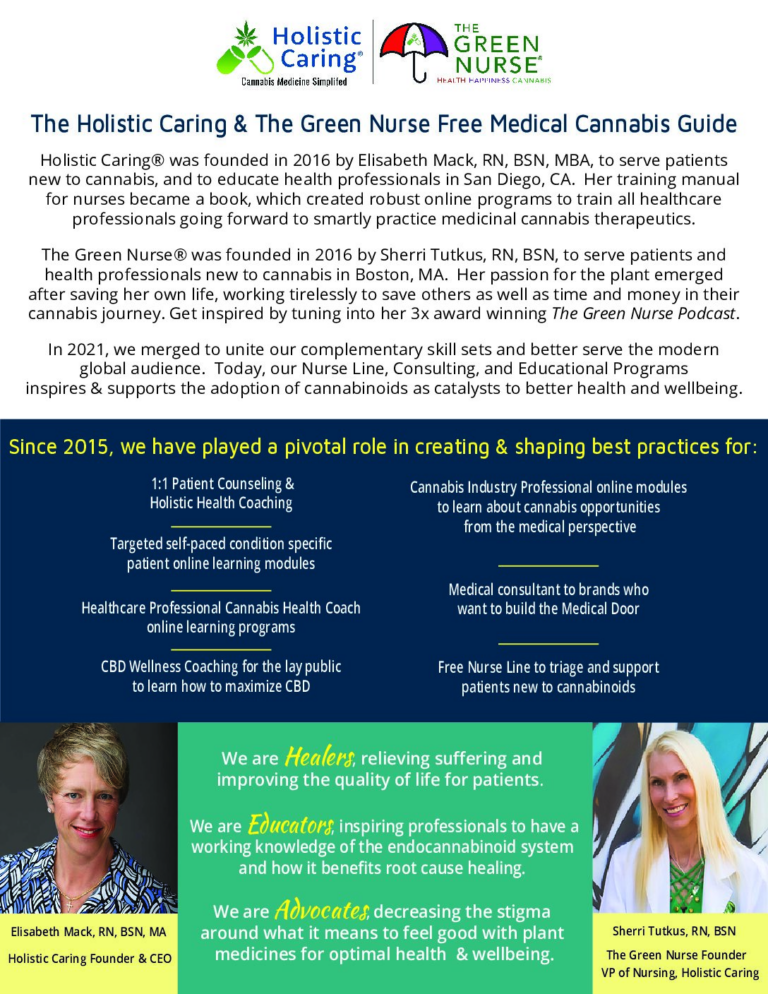
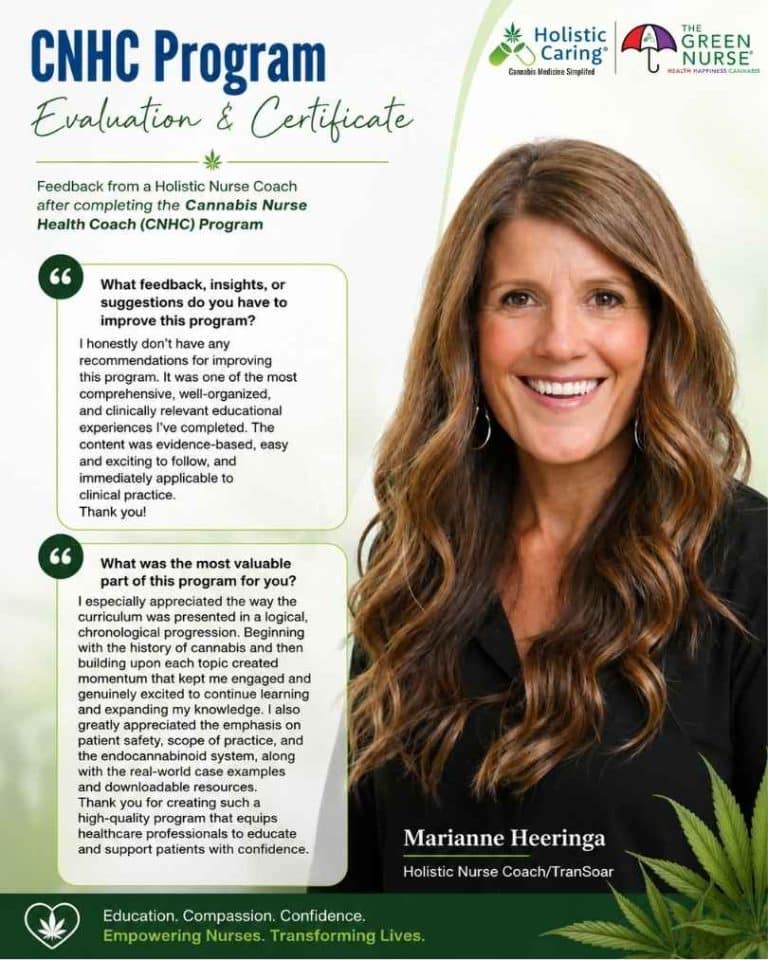
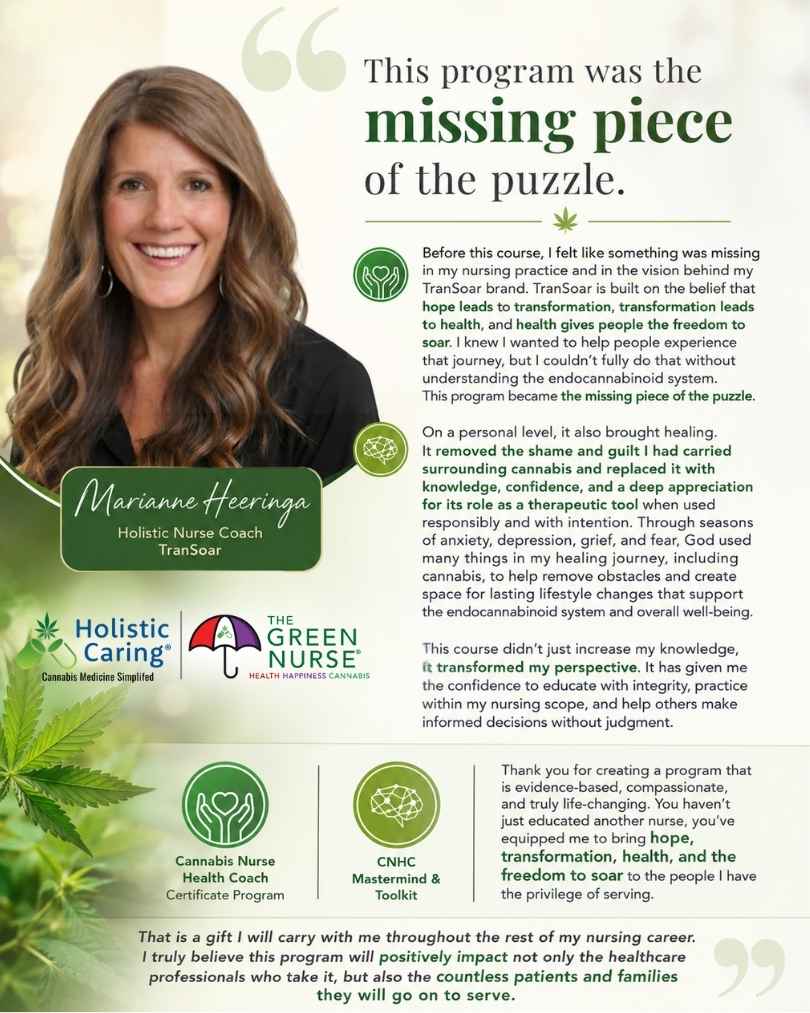
Then God answered another prayer by bringing cannabis-nursing educators and mentors into my path. Through Holistic Caring & The Green Nurse, I immersed myself in cannabis nursing education and a mastermind community. I absorbed as much as I could, and that education changed the direction of my path again. It felt like a missing piece of a puzzle I had been assembling for nearly three decades.
Laboratory medicine taught me to look beneath the surface, down to the cellular level, where information invisible to the eye can reveal so much about what is happening within us. It also sparked my curiosity about the person behind the specimen and ultimately led me from the laboratory to the bedside.
Nursing taught me to care for the whole person, not simply the assessment, medications, procedures, or diagnosis, but the human being experiencing them.
Emergency nursing taught me how precious and fragile life can be. It also allowed me to witness, again and again, how the same medication or treatment could work beautifully for one person and very differently for another.
Hospice nursing taught me to focus on what truly matters and showed me the importance of a holistic approach to healthcare, caring for the body, mind, and spirit while honoring each person’s goals, values, comfort, dignity, and quality of life.
Genetics taught me that personalized care begins by recognizing that no two people are exactly alike. Our DNA can offer valuable clues about how we may metabolize certain medications, respond to nutrition and exercise, experience stress, sleep and pain, and where certain health predispositions may exist. It taught me that genetics is not our destiny – it is information. And when that information is combined with lifestyle, clinical history, environment, and personal goals, it can empower us to ask better questions and make more informed choices about our health.
Nurse coaching taught me to listen deeply, ask rather than dictate, honor a person’s readiness for change, and help people discover the wisdom, strength, and motivation already within them. It taught me that lasting transformation is not something we simply prescribe to another person; it is something we help them uncover and build from within.
Cannabis nursing taught me how to take the science of the endocannabinoid system and translate it into individualized, evidence-informed care. I learned to look beyond THC and CBD – to consider minor cannabinoids, terpenes, dosing, timing, delivery methods, potential medication interactions, and the unique needs of the whole person. I learned to use clinical resources such as CannaKeys to explore the evolving evidence and develop thoughtful care plans built around education, harm reduction, careful titration, symptom tracking, and follow-up. Most importantly, it taught me that cannabis nursing is not simply about recommending a product; it is about empowering people with knowledge so they can make safer, more informed decisions about their health.
And my faith taught me how all of those pieces fit together.This is the foundation of TranSoar. To me, TranSoar means transforming so that we can soar, from the inside out. It is about helping people understand their unique biology, care for their whole person – body, mind, and spirit – and discover the choices that may help them live with greater intention, health, hope, and purpose.
One day, I pray that TranSoar will grow into a nonprofit capable of serving people who might otherwise never have access to this kind of personalized education and support. I do not believe DNA tells us everything about who we are. It does not determine our worth, predict our future with certainty, replace medical judgment, or define our purpose.
But I do believe it can reveal something extraordinary. It can remind us that we are wonderfully complex. It can help us ask better questions. It can help us understand why one-size-fits-all care so often falls short. It can motivate us to care for the body we have been given. And for me, it has become one more beautiful window through which I see the creativity of God.
Maybe the questions are not simply: Where did I come from? Why am I here? Where am I going?
Maybe the deeper questions are: What has God placed within me? What has He carried me through? And how can I use everything I have learned, even the painful parts, to serve someone else?
That is where my journey has led me. From the laboratory, to the bedside, to hospice, to genetics, to nurse coaching and cannabis nursing, each step that once seemed separate now looks like part of the same path. Are you ready to discover what your DNA can teach you about yourself, or how genetic insights may help you better understand and support the clients you serve?
Your DNA does not define your destiny, but it may offer valuable insights that help you ask better questions, make more informed choices, and personalize the journey toward greater health and wellness.
Ready to uncover what your DNA has to say? Explore the range of DNA tests and unlock the secrets hidden within your unique genetic blueprint. Click the link below to get started.
https://holisticcaring.com/product/dynamic-dna-laboratories/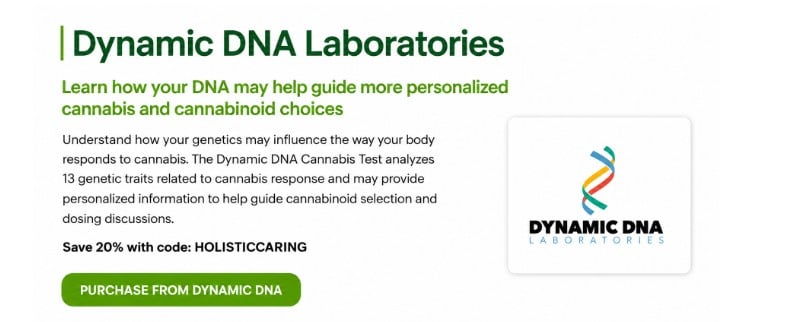
The Cannabis DNA Test is just one of several options available. Be sure to scroll through the full menu of DNA tests to see which insights may be most useful for your health and wellness goals.
Explore the complete menu of DNA tests