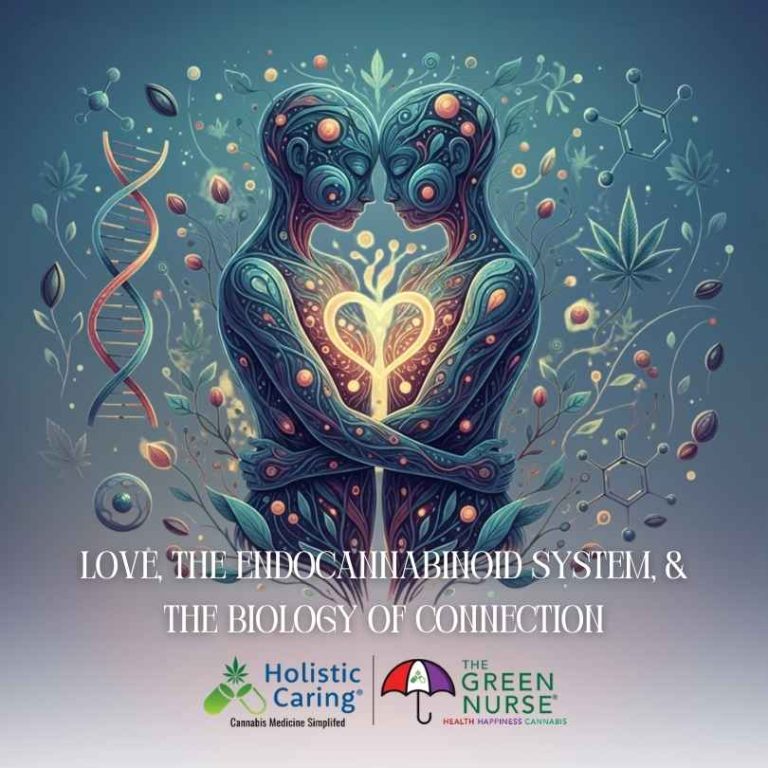
February invites us into deep conversations about the nature of love—but love is far more than just a fleeting emotion or a poetic sentiment. It is a complex biological state, intricately shaped by our needs for connection, physical safety, pleasure, and existential meaning. Beneath our everyday experiences of affection, social bonding, romantic intimacy, and even the sting of heartbreak lives a sophisticated regulatory system designed to help us feel balanced, connected, and whole: the endocannabinoid system (ECS). This vast network of receptors and signaling molecules acts as a bridge between the body and mind, playing a fundamental role in how we process the chemicals of connection.
The ECS is often described as a master regulator, but it may be more accurate to think of it as a relational system. It plays a central role in mood regulation, stress response, pain perception, reward, immune balance, and emotional processing (Lu & Mackie, 2016). When the ECS is functioning optimally, people often experience greater emotional resilience and openness to connection. When it is dysregulated—commonly through chronic stress, trauma, inflammation, or illness—love and intimacy can feel more difficult to access or sustain.
One of the most poetic intersections between love and biology is the role of anandamide, an endogenous cannabinoid whose name comes from the Sanskrit word ananda, meaning bliss. Anandamide is released during moments of pleasure, physical touch, laughter, bonding, and social connection. It binds to cannabinoid receptors in the brain and body, supporting mood, reducing anxiety, and reinforcing feelings of closeness and reward (Blesching, 2024a). In this way, love quite literally nourishes the ECS—and a supported ECS enhances our capacity to love in return.
From the Endocannabinoid System to the Endocannabinoidome
As research advances, scientists have expanded the framework beyond the ECS to what is now referred to as the endocannabinoidome (eCBome). This broader network includes endocannabinoids and cannabinoid receptors, but also lipid mediators, metabolic enzymes, immune signaling pathways, gut microbiota interactions, and plant-derived compounds that influence these systems (Russo, 2016).
This expanded understanding matters because emotional health, connection, and love are not governed by a single pathway. They emerge from interconnected biological systems—including serotonin signaling, inflammation, nervous system regulation, and neuroplasticity. The endocannabinoidome reflects this complexity, reminding us that well-being is an ecosystem rather than a single switch (Blesching, 2024b).
Cannabis, the Heart, and Emotional Safety
While cannabis has a storied history of enhancing love and intimacy, contemporary discussions often miss the critical nuances of dosage, context, and individual physiology. The science is clear: THC activates CB1 receptors to shift mood and perception, but high doses can trigger the sympathetic nervous system, raising the heart rate and inducing anxiety (Blesching, 2025). For many—especially those prone to overstimulation—this shift can feel more like a disruption than a bridge to connection.
To navigate this, a shift toward gentle, intentional dosing is essential.
Building a foundation with CBD offers a more grounded experience. Unlike THC, CBD modulates the stress response and serotonin signaling without overwhelming the brain’s CB1 receptors, fostering a sense of emotional steadiness and calm (Lu & Mackie, 2016). By soothing the nervous system, CBD allows individuals to remain present and emotionally available.
When micro-doses of THC are layered thoughtfully onto this CBD base, the result is often a subtle lift in mood and an increase in emotional warmth, devoid of intoxication (Blesching, 2025). This method prioritizes regulation over intensity, honoring the principle that vulnerability requires a sense of safety. Ultimately, a regulated body is one that is truly capable of intimacy, attunement, and genuine presence.
Psilocybin, Microdosing, and the Endocannabinoidome
Psilocybin enters the conversation not as a substitute for cannabinoids but as a complementary player within the broader endocannabinoidome. While psilocybin primarily acts on serotonin receptors—most notably 5-HT-2A—emerging research suggests significant interaction between serotonergic pathways and endocannabinoid signaling (Blesching, 2024b).
When used in microdoses, psilocybin is not about inducing perceptual changes. Instead, individuals often report subtle yet profound effects, such as heightened emotional awareness, reduced self-criticism, greater empathy, and a deepened sense of interconnectedness (Blesching, 2024b). These outcomes align with current understandings of neuroplasticity, emotional regulation, and the balance of regulatory networks.
In this context, CBD can act as a stabilizing companion—promoting restful sleep, reducing stress, and supporting nervous system balance during microdosing practices, all without diminishing clarity or insight.
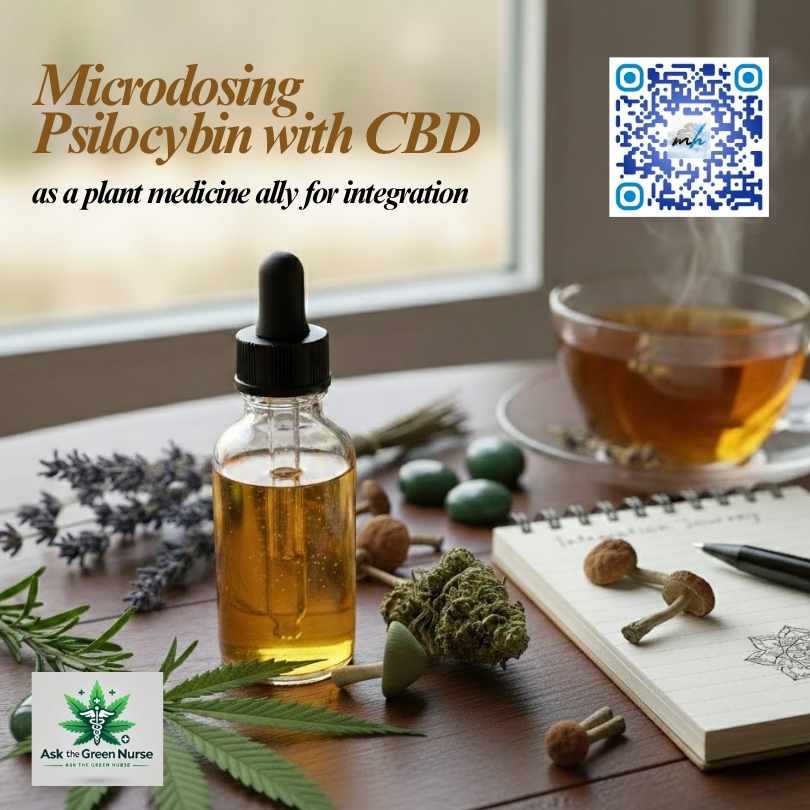
Check out the Substack Article written by Nurse Sherri called on Microdosing Psilocybin with CBD as a plant medicine ally for integration.
Love as Regulation, Not Performance
Perhaps the most important reframe is this: love is not an elusive goal we must strive to achieve—it is a natural state of being that we simply need to support. By shifting our focus from the pursuit of love to the cultivation of an environment where it can flourish, we change our entire relationship with ourselves and others.
Daily practices such as physical touch, rhythmic movement, intentional breathwork, restorative rest, genuine laughter, sacred ritual, and active community engagement do more than just make us feel good; they naturally stimulate endocannabinoid signaling and promote profound emotional balance (Lu & Mackie, 2016). These activities serve as the biological foundation for connection. Plant medicines, when used thoughtfully and responsibly, may act as powerful allies to complement these practices—but they are not a shortcut. They cannot replace the essential pillars of clear intention, active integration, or the daily work of maintaining a relationship.
This February, rather than falling for the pressure of performative romance, love invites us to think less about grand, expensive gestures and more about creating biological safety and deep emotional presence. When the nervous system is properly supported and moved out of a state of survival, love becomes less effortful and more embodied. It stops being a task and starts being a way of life.
Ultimately, love lives in the delicate chemistry of connection. And that connection, when gently supported through consistent care and physiological regulation, becomes the most potent medicine we have.
A February Invitation
Love doesn’t need to be loud to be powerful. Sometimes it arrives quietly—through steadier sleep, softer reactions, deeper breaths, or the ability to stay present with ourselves and others. When we support the biology of connection—through nervous system care, intentional practices, and gentle plant medicine support—we create the conditions for love to move more freely through our lives.
This February, consider love not as something to perform or perfect, but as something to tend. Support your endocannabinoid system with kindness. Approach cannabis with respect and restraint. Explore microdosing mushrooms only if and when you feel called—and always with intention, integration, and care.
Love starts within the body—it’s the foundation of how we connect with ourselves and others. By nurturing the system built for connection, we create the space for love to flourish, both internally and in our relationships. It’s about listening to your needs, honoring your emotions, and cultivating kindness toward yourself and others. We’re here to support you on your journey toward self-love, empowering you to embrace your full potential and build deeper connections with the world around you.
If you’re curious about how CBD-forward cannabinoid care, gentle THC microdosing, or intentional microdosing practices might support emotional balance, nervous system regulation, or deeper connection, we’re here to walk alongside you.
Explore Bloom Hemp CBD for thoughtfully crafted, lab-tested products designed to support the endocannabinoid system gently and consistently.
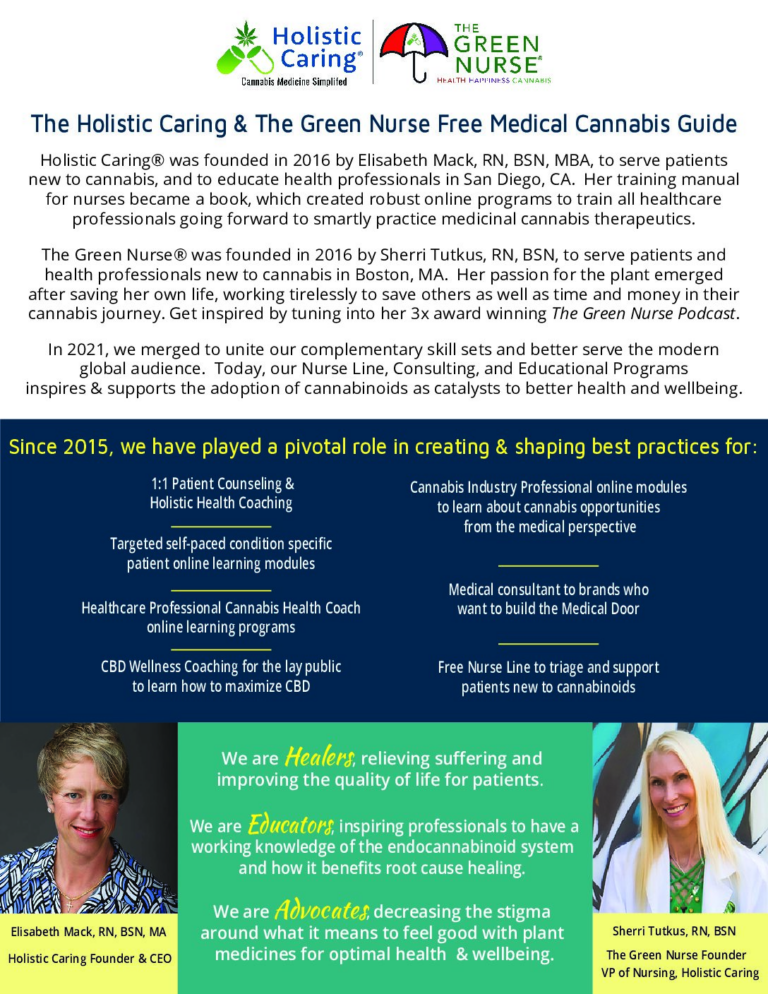
Connect with Holistic Caring & The Green Nurse for education, consultation, and integration-focused guidance around cannabis and psychedelic-informed care.
Discover our collaboration with Mood Healers and receive a complimentary Microdosing Guide along with a free gift with your purchase.
Call our free nurse line with questions – 970-404-HOPE (4673)
References
Blesching, U. (2024a, June 25). Love and the endocannabinoid system. CannaKeys. https://cannakeys.com/love-and-the-endocannabinoid-system/
Blesching, U. (2024b, August 11). Psilocybin and the eCBome. CannaKeys. https://cannakeys.com/psilocybin-and-the-ecbome/
Blesching, U. (2025, September 28). Cannabis and the heart. CannaKeys. https://cannakeys.com/cannabis-and-the-heart/
Lu, H.C., & Mackie, K. (2016). An introduction to the endogenous cannabinoid system. Biological Psychiatry, 79(7), 516–525. https://doi.org/10.1016/j.biopsych.2015.07.028
Russo, E. B. (2016). Beyond cannabis: Plants and the endocannabinoid system. Trends in Pharmacological Sciences, 37(7), 594–605. https://doi.org/10.1016/j.tips.2016.04.005