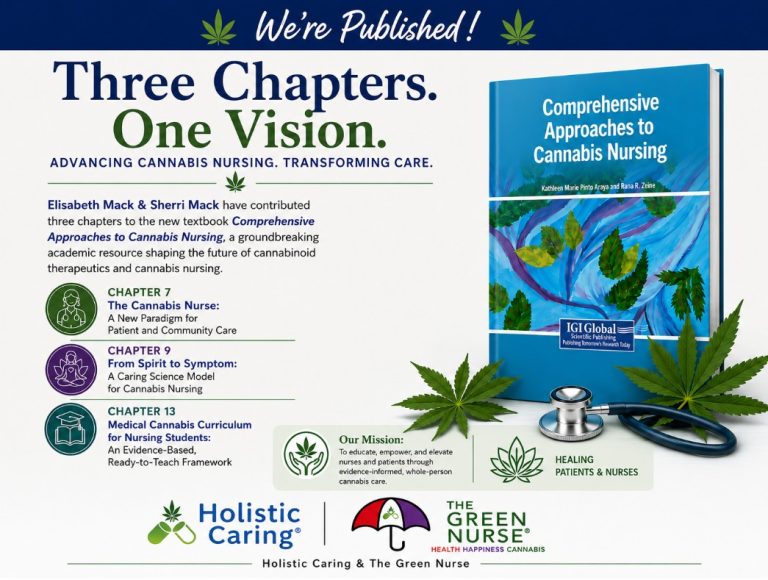
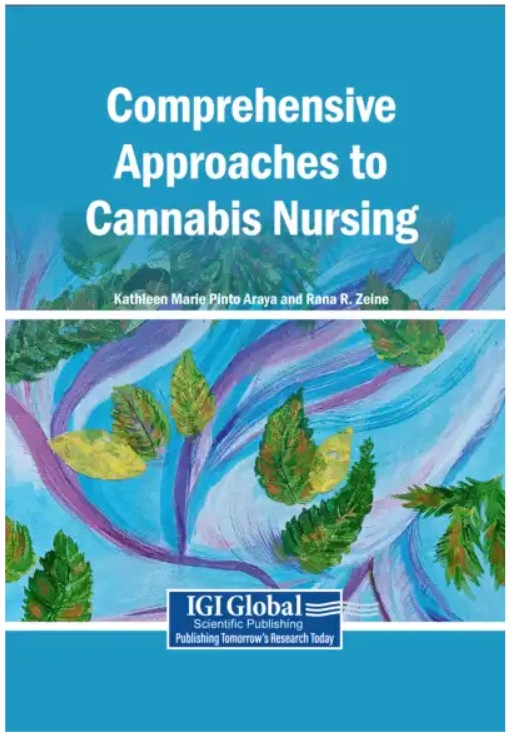
The publication of Comprehensive Approaches to Cannabis Nursing marks an important milestone for healthcare and for the emerging specialty of cannabis nursing.
As cannabis use continues to expand across medical, wellness, and adult-use settings, healthcare professionals are increasingly being asked to answer questions about cannabinoid therapeutics, safety, dosing, delivery methods, drug interactions, and harm reduction. Yet despite growing patient demand, many nurses and healthcare professionals have received little or no formal education on the endocannabinoid system or cannabis therapeutics.
This is precisely why Comprehensive Approaches to Cannabis Nursing was created. Edited by Karina Pinto Araya and Rita Zeine and published by IGI Global Scientific Publishing, this groundbreaking textbook helps bridge the gap between patient use and professional knowledge. The book explores the evolving role of nurses in cannabinoid care while addressing critical topics such as policy, advocacy, palliative care, social determinants of health, cannabis use disorder, patient education, and clinical practice.
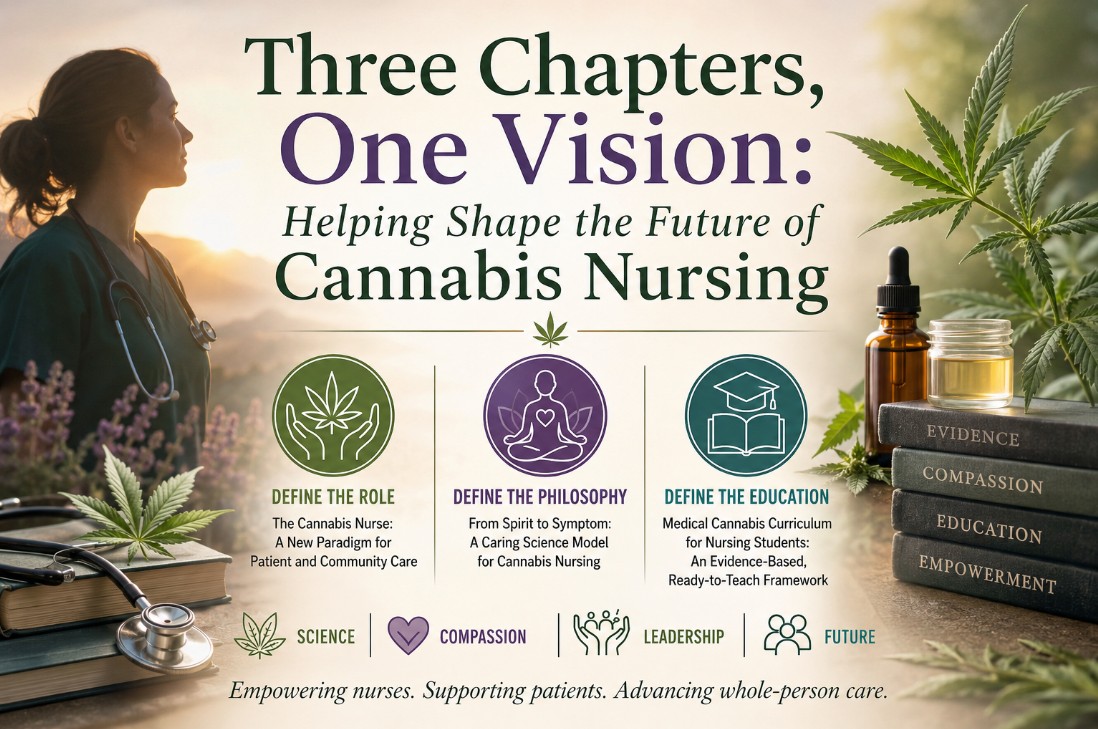
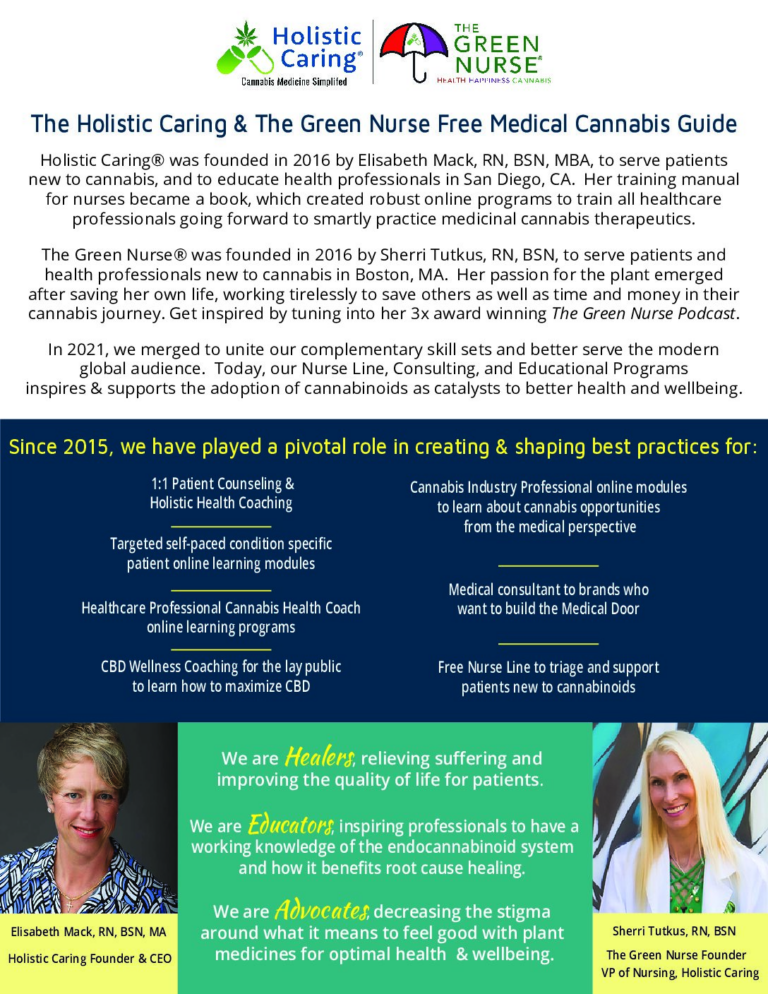
Elisabeth Mack and Sherri Mack are honored to contribute three essential chapters to this pivotal work. Each chapter, while distinct, collectively presents a unified vision for the future of cannabis nursing, reflecting a deep commitment to advancing holistic patient care through plant medicine therapies.
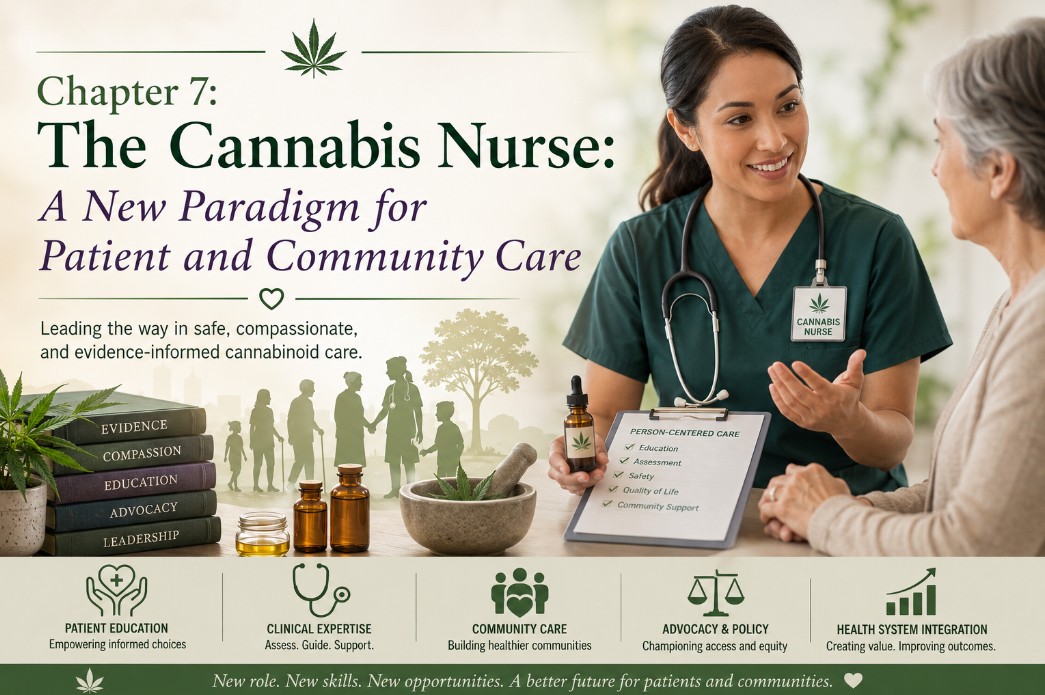
Chapter 7: The Cannabis Nurse: A New Paradigm for Patient and Community Care
Authored by Elisabeth Mack, MBA, BSN, RN, this chapter delves into the rise of the Cannabis Nurse as a vital new specialty in healthcare.
As patient access to cannabis products expands, a critical gap remains: a shortage of clinicians equipped to guide them safely and effectively. This chapter defines the essential knowledge, skills, and competencies nurses need to confidently support patients utilizing cannabinoid therapeutics, outlining clear workflows and quality measures for practice.
It explores the dynamic role of the Cannabis Nurse across diverse settings—including oncology, palliative care, geriatrics, mental health, pain management, and community health. Furthermore, it illuminates pathways for nurses to lead in this emerging field through entrepreneurship, program development, and seamless health system integration.
At its heart, this chapter addresses a fundamental question for modern healthcare: As patients increasingly turn to cannabis for therapeutic purposes, who will ensure their safety and well-being?
The answer, with growing clarity, is the nurse.
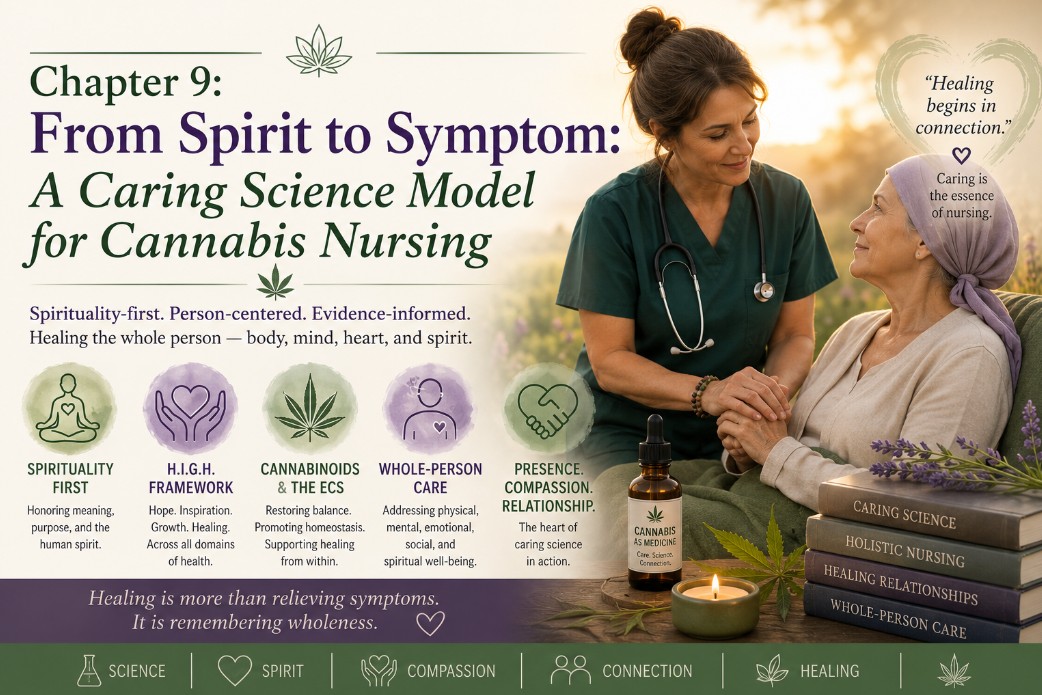
Chapter 9: From Spirit to Symptom: A Caring Science Model for Cannabis Nursing
Authored by Sherri Mack, BSN, RN, this chapter explores a different yet equally important dimension of cannabis nursing: spirituality as the root of cannabis care. While much of modern healthcare focuses on symptoms, diagnoses, and treatment protocols, this chapter posits that true healing often begins long before symptom relief.
Drawing upon Holistic Nursing principles, Jean Watson’s Theory of Human Caring, Caring Science, and contemporary cannabinoid research, this work proposes that spirituality is not separate from healthcare but rather the foundation upon which healing is built.
The chapter introduces the Spirituality-First Clinical Model and the H.I.G.H. (Hope, Inspiration, Growth, and Healing) Framework. These models illustrate how cannabis-supported care can holistically influence the biological, mental, emotional, social, and spiritual domains of health.
Through compelling patient narratives and clinical experiences, the chapter demonstrates that cannabis nursing extends beyond product recommendations. It is about presence, relationship, intention, nonjudgment, and helping patients reconnect with their innate capacity for healing. This work reflects a core belief that has guided Nurse Sherri’s practice for decades: that spirituality is the very root of effective cannabis care.
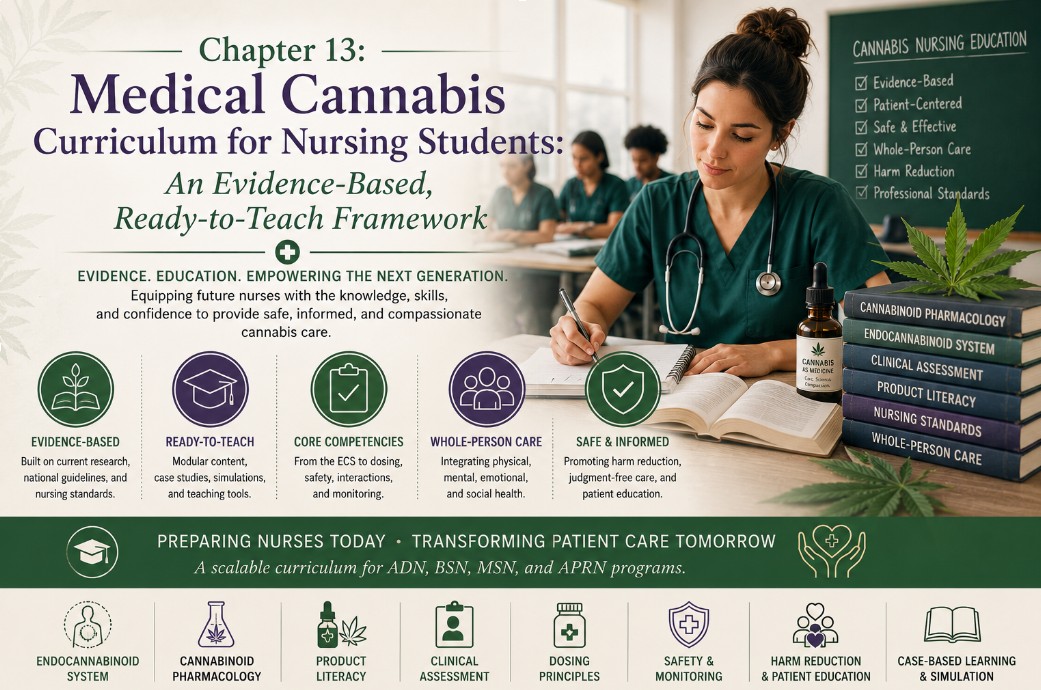
Chapter 13: Medical Cannabis Curriculum for Nursing Students: An Evidence-Based, Ready-to-Teach Framework
In her second chapter, Elisabeth tackles a crucial challenge in modern healthcare: equipping the next generation of nurses to provide care in a world where cannabis therapeutics are becoming mainstream.
Despite its common use among patients, cannabis medicine is rarely covered in nursing school curricula. This educational gap leaves new nurses unprepared to guide patients, assess safety, or understand potential drug interactions. They lack the evidence-informed knowledge needed to provide comprehensive care.
This chapter provides a powerful solution: a practical, ready-to-teach curriculum for nursing students. It is built upon the solid foundation of guidelines from the National Council of State Boards of Nursing (NCSBN) and the professional standards of the American Nurses Association/American Cannabis Nurses Association. This curriculum is designed for seamless integration into both undergraduate and graduate nursing programs.
The educational framework covers essential topics for holistic patient care, including:
- Endocannabinoid system physiology
- Cannabinoid pharmacology
- Product literacy
- Clinical assessment
- Dosing principles
- Safety monitoring
- Harm reduction
- Case-based learning
- Simulation strategies
- Competency evaluation
The mission is clear: to ensure that future nurses have the knowledge and confidence to meet patients’ needs and provide the highest standard of care in a changing world.
While each of these chapters addresses a different aspect of cannabis nursing practice, they all share a common vision. Cannabis nursing is about more than just cannabis—it is about providing holistic, whole-person care. It involves the application of nursing science, caring science, education, advocacy, assessment, and therapeutic relationship-building to a rapidly evolving field of healthcare.
- One chapter defines the role.
- One chapter explores the philosophy.
- One chapter prepares the next generation.
Together, these chapters form an emerging framework for how nurses can guide the integration of cannabinoid therapeutics into modern healthcare.
As this specialization continues to evolve, nurses will be instrumental in reducing stigma, improving safety, promoting harm reduction, supporting informed decision-making, and helping patients navigate complex treatment options.
We are honored to contribute to this vital conversation. We are also deeply grateful to the patients, nurses, educators, researchers, and healthcare professionals who advance this important work every day.
The future of cannabis nursing is being written now, and we believe nurses must lead the way.
Explore the Book “Comprehensive Approaches to Cannabis Nursing”
IGI Global Scientific Publishing – All chapters may be viewed or purchased individually through the publisher.
Elisabeth and Sherri’s Contributing Chapters, Abstracts and Keywords
Chapter 7 – https://www.igi-global.com/gateway/chapter/412804
Mack, E. (2026). The Cannabis Nurse: A New Paradigm for Patient and Community Care. In K. Pinto Araya & R. Zeine (Eds.), Comprehensive Approaches to Cannabis Nursing (pp. 205-230). IGI Global Scientific Publishing. https://doi.org/10.4018/979-8-3373-7287-7.ch007
ABSTRACT – As cannabis nursing develops, it meets the growing demand for expert support among patients using cannabis therapeutically. After all, this novel field has developed in response to a need; access to medical cannabis has grown, yet access to trained clinicians to help steer care has not. This chapter outlines the Cannabis Nurse’s role and practical strategies for integrating it into healthcare and communities, and positions cannabis nursing within emerging models of value-based and integrative care. It covers core knowledge areas, essential skills, workflows, and quality metrics from the National Council of State Boards of Nursing. Real-world examples highlight its impact in oncology, geriatrics, palliative care, mental health, and pain management. The chapter also discusses entrepreneurial, administrative and business opportunities, offering resources for administrators and nurse leaders, and clear pathways for nurses’ education and leadership in providing value-based care.
Keywords: Cannabis Nursing, Endocannabinoid System, Clinical Assessment, Harm Reduction, Holistic Care, Healthcare Innovation, Nursing Leadership, Entrepreneurship, Disease Management, Health System Integration
Chapter 9 – https://www.igi-global.com/gateway/chapter/412806
Mack, S. (2026). From Spirit to Symptom: A Caring Science Model for Cannabis Nursing. In K. Pinto Araya & R. Zeine (Eds.), Comprehensive Approaches to Cannabis Nursing (pp. 257-290). IGI Global Scientific Publishing. https://doi.org/10.4018/979-8-3373-7287-7.ch009
ABSTRACT – This chapter examines cannabis nursing as an emerging specialty grounded in caring science, holistic nursing philosophy, and contemporary cannabinoid research, advancing a spirituality-first approach to clinical practice. Drawing upon Jean Watson’s Theory of Human Caring, professional nursing standards, and the endocannabinoid system, the chapter asserts that spirituality is foundational to ethical, person-centered nursing practice. The Spirituality-First Clinical Model and the H.I.G.H. Framework (Hope, Inspiration, Growth, and Healing) are introduced to illustrate how cannabis supported care may influence physical, mental, emotional, social, and spiritual domains of health. Through selected clinical narratives, the chapter demonstrates how presence, nonjudgment, intention, and relationship centered care shape outcomes. Emerging evidence supports the role of cannabinoids in symptom management, while also identifying potential risks. This work positions cannabis nursing as a relational and ethically grounded specialty that supports whole person care.
Keywords: Caring Science, Cannabis Nursing, Caritas Processes, Endocannabinoid System, Holistic Nursing, Medical Cannabis, Nursing Presence, Spiritual Assessment, Spiritual Care in Nursing, Therapeutic Relationship, Trauma Informed Care, Transpersonal Caring, Watson’s Theory of Human Caring, Spirituality-First Clinical Model, H.I.G.H. Framework
Chapter 13 – https://www.igi-global.com/gateway/chapter/412810
Mack, E. A. (2026). Medical Cannabis Curriculum for Nursing Students: An Evidence-Based, Ready-to-Teach Framework. In K. Pinto Araya & R. Zeine (Eds.), Comprehensive Approaches to Cannabis Nursing (pp. 383-416). IGI Global Scientific Publishing. https://doi.org/10.4018/979-8-3373-7287-7.ch013
ABSTRACT – This chapter presents an evidence-informed, ready-to-implement curriculum for integrating medical cannabis education into undergraduate and graduate nursing programs (BSN/MSN/APRN). Grounded in the NCSBN’s 2018 national guidelines and the 2024 ACNA/ANA Cannabis Nursing Scope and Standards of Practice, it translates essential competencies—including legal literacy, endocannabinoid system physiology, cannabinoid pharmacology, dosing principles, product literacy, a whole-person assessment, and harm-reduction strategies—into a structured instructional model that aligns with contemporary nursing education frameworks.
Despite widespread patient use, most nursing graduates receive no formal preparation to counsel on cannabis use, assess safety risks, or evaluate drug–drug interactions. This chapter addresses that gap by providing modular content, case-based learning tools, simulation strategies, and competency-based evaluation methods. The curriculum equips faculty to teach confidently, supports safe and nonjudgmental patient care, and provides a scalable foundation for ADN, BSN, MSN, and APRN programs seeking to incorporate cannabis therapeutics into modern nursing practice.
Keywords: Cannabis Nursing, Cannabinoid Therapeutics, Clinical Assessment, Endocannabinoid System, Medical Cannabis Curriculum, Nursing Education, Pharmacology, Product Literacy, Safety and Monitoring, Harm Reduction
Each chapter of the book is available for individual viewing and purchase. We also invite you to download a complimentary Book Preview, which offers an overview of all the chapters and their contents. This allows you to explore the material and select the sections most relevant to your particular journey toward holistic wellness through Cannabis Nursing.